DeedCheck Local · Cook County 101
A stranger’s name showed up on mail to my address. Here is what I learned to check.
If you have lived in your Cook County home for years and never looked up your own deed, this is worth four minutes.
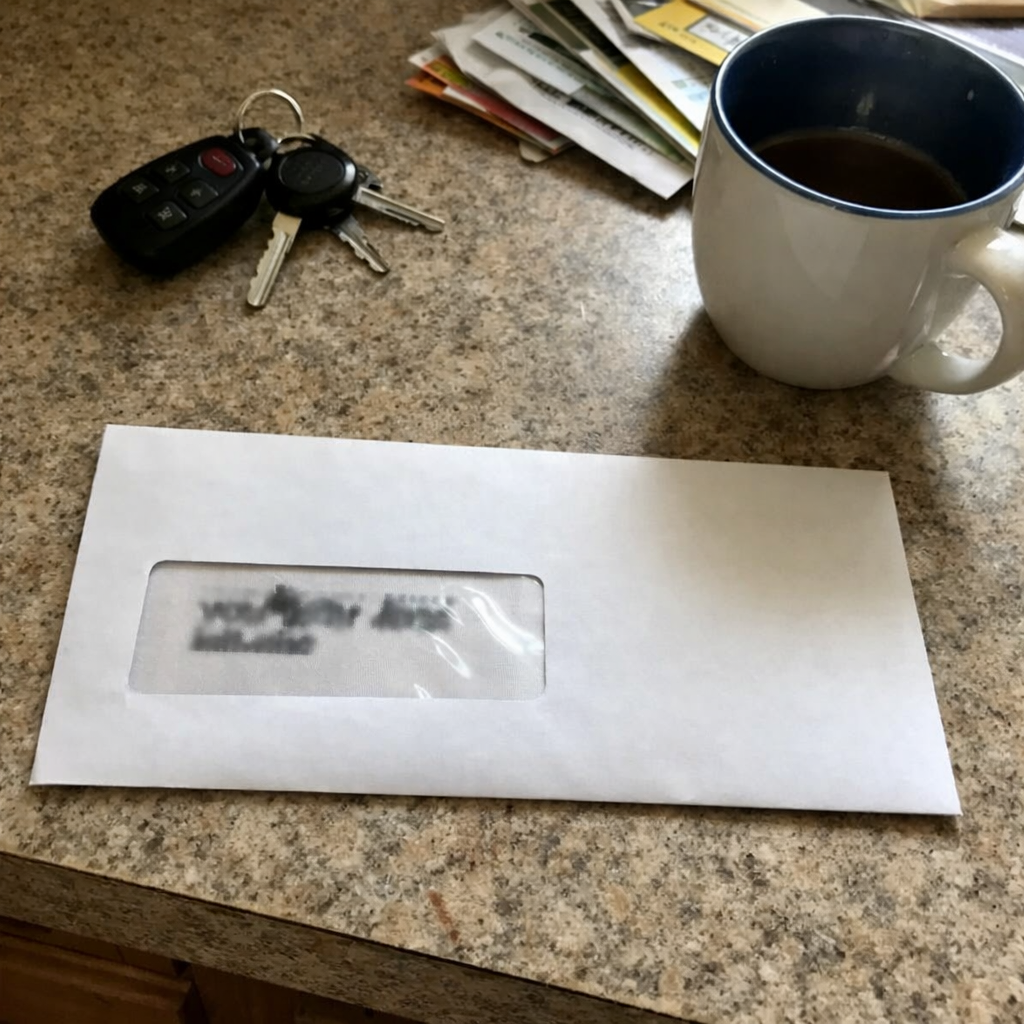
Illustrative example. Names shown in any image on this page are fictitious.
It usually starts with something small. A piece of mail with your street address on it, but a name you do not recognize. A letter addressed to someone who has never lived in your house. For most people the first reaction is to toss it. The second reaction, a day later, is a quieter question: what else is attached to my address that I have never actually looked at?
Your home has a paper trail at the county. Every sale, every mortgage, every transfer is recorded and indexed, and almost all of it is public. The strange thing is how few long-time homeowners have ever pulled their own record. You signed a stack of papers at closing, you got the keys, and you never went back to look. That is normal. It is also exactly the gap this guide closes.
A piece of mail is a symptom. The record is the truth.
An unfamiliar name on an envelope can be nothing. A previous owner. A mix-up at the post office. A marketing list that bought a bad address. But it can also be the first visible sign that something changed in the records tied to your property. The only way to know which one it is, is to stop guessing and go look at what the county actually has on file.
What the county has that you have probably never seen.
When you look up a Cook County property, the record will show you the most recent recorded deed, the names on it, the type of deed, and the date it was recorded. It will show whether a mortgage was recorded, and when. On a recent test of a residential parcel, the latest deed on file was a warranty deed, a mortgage was recorded the same day, and the two names on the index matched the first page of the deed. That is the kind of plain answer most homeowners never bother to pull, because they assume they already know it.
Why “I would have been notified” is the dangerous assumption.
Most people believe that if anything happened to their property record, someone would call them. Usually no one does. Filings are recorded and indexed on the county’s schedule, not yours, and the people most exposed are the ones who are paid off, who travel, or who have not touched their paperwork in a decade. The worst part is never the filing itself. It is finding out about it months late, after your options have narrowed. That is the real reason to look now, while looking still costs you nothing but a few minutes.
You can check this yourself, for free. Here is how.
We mean that. The public record is free, and you should be able to do a basic check in a few minutes. Here is the exact path:
- Find your PIN. Your Property Index Number is on your tax bill, or you can look it up by address on the Cook County Assessor site.
- Search the Clerk’s recording index by PIN. This returns the documents recorded against your property, newest first.
- Open the latest deed. Check the names, the deed type, and the recording date against what you remember from closing.
- Note two dates. Write down the date you checked and how current the index says it is, so you know what the result does and does not cover.
If that is all you need, you are done, and it did not cost a dollar. The free self-check guide below walks through each step with the exact links.
When a $14.95 human-reviewed report is worth it.
The DIY search works until it does not. Multiple PINs on one address, a condo, a trust, an ambiguous name match, or a very recent filing can all make the public index confusing to read. That is when people want a second set of eyes. A DeedCheck Local report is a person pulling your record, reading it, and handing you one plain, dated document: whose names are on the latest deed we could verify, what type it is, when it was recorded, and how current the index was on the day we checked. One payment. No subscription. If we cannot resolve it cleanly, we tell you that plainly instead of dressing up a gap as reassurance.
Your Cook County deed check
A human reads your record and sends one dated report. Free self-check guide included.
Not title insurance or legal advice. The free Cook County public lookup is always available on its own.
Why people are checking now
Reporting on property-record fraud has made more homeowners curious about their own records. Local coverage has described a case in Burbank where a property was allegedly sold using a forged deed. In a separate federal case in St. Louis, prosecutors documented guilty pleas tied to at least 14 properties. An Arizona landowner told a TV station he only learned his land had been sold when a closing letter arrived.
Sources: Riverside-Brookfield Landmark (Burbank); U.S. Department of Justice (St. Louis); KOLD News (Arizona). These are examples from public reporting, not a measure of how common this is.
The 30-second version
- An unfamiliar name on your mail may be nothing, but it is a reason to look at your actual record.
- The county shows the names on your latest deed, the deed type, and the recording date.
- Records have a normal indexing lag, so a good check always shows two dates.
- You can check it free in four steps, or get a dated, human-reviewed report for $14.95.
Questions people ask
Is this just the free county lookup with a price on it?
No. The public lookup is free and we tell you how to use it on this page. You are paying for a person to pull your record, read it, and hand you one plain, dated document, which is useful when the index is confusing or you simply do not want to do it yourself.
Will a report tell me if someone stole my home?
A report tells you what the public record showed on the date we checked: the names on the latest deed we could verify, the deed type, the recording date, and how current the index was. It is dated public-record evidence, not title insurance and not legal advice. If something looks wrong, speak with a licensed attorney or title professional.
How current is the information?
County recording and indexing run on a lag. Every report shows the date we checked and how current the index was, so you know exactly what it covers. A recent clean check cannot rule out a filing that has not been indexed yet, and we will say so.
Can I order one for a relative’s home?
You can order for a property you own or have the owner’s permission to check. The authorization box above confirms that. The free public lookup is open to anyone on its own.
Is there a subscription?
No. This is a single $14.95 report. No recurring charge, no auto-renewal.